
Welcome to the New Right Report. Today I want to introduce you to three well-known conservative-Christian figures who started out as secular, elite-educated, data-driven thinkers — and yet, over time, have moved toward Christian faith.
These aren’t lightweights. These are major conservative voices whose influence spans policy, technology, and global business: Charles Murray, Peter Thiel, and Pat Gelsinger.
Let’s start with Charles Murray, the legendary policy analyst behind The Bell Curve.
He recently wrote a stunning column in The Washington Post titled, “I Now Believe in God. My Peers Are in Disbelief.”
The shock wasn’t just what he said — it was where he said it.
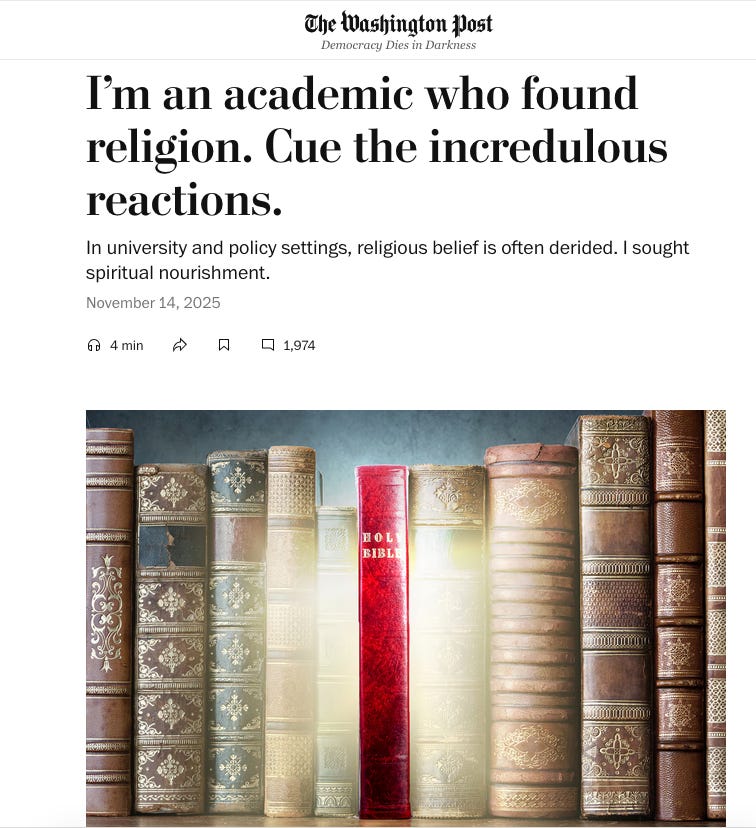
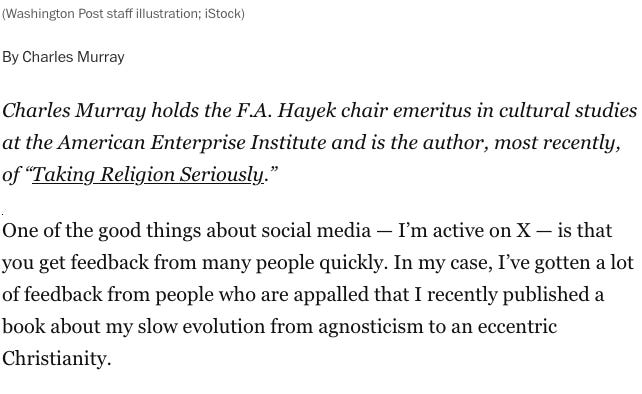
The Post has never exactly been a welcoming home for Murray, and yet here he is, explaining his own move from atheism toward belief.
Murray describes how he lived most of his life with zero exposure to serious Christians.
None of his colleagues were openly religious, he never attended church, and he never saw faith lived out.
And he asks the question many elite secular people should take seriously: How much exposure do you actually have to people with deep religious conviction?
His turn toward God began when his wife became pregnant.
Seeing a child in the womb — this intricately woven human — he realized this couldn’t be an accident.
It looked like the work of a Designer.
As she moved toward faith, he followed. Her light drew him toward the Light.
Murray also talks about applied empiricism — testing the claims of Christianity.
He dug into cosmology, the origins of the universe, the fine-tuning of creation, and the historical reliability of the Gospels.
He asked hard questions:
Why is there something rather than nothing?
What explains consciousness or moral law?
Can pure materialism really make sense of any of this?
Like C.S. Lewis, he even speaks tenderly of his wife: “I love her far more than evolution requires.”
It’s not a dramatic born-again story. It’s slow, thoughtful, and deliberate.
However, he’s come into the Kingdom, it’s something to rejoice over.
Now to Pat Gelsinger, former CEO of Intel.
The Financial Times recently ran a long interview with him titled, “I’ve Been Called Here for a Purpose.”
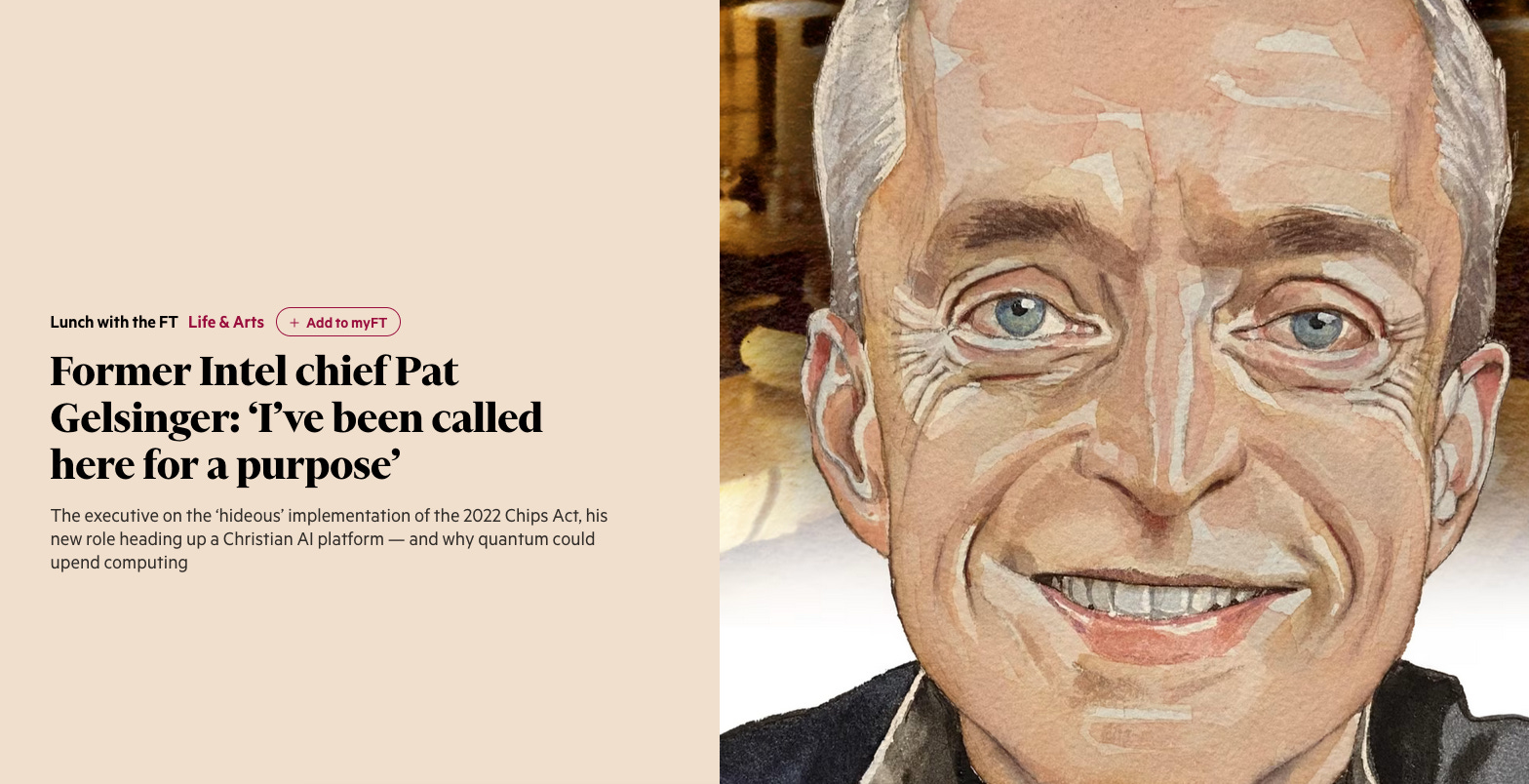
Gelsinger came to faith back in 1980 after hearing Revelation preached — specifically the warning about the lukewarm believer.
He realized his work, his leadership, and his talent for building microchips and organizations weren’t random.
It was part of his calling.
He’s blunt about his younger years — smoking pot, drinking, getting into trouble — before he left that behind, met his wife, and devoted himself to a life of discipleship and purpose.
The FT asks him about the rise of evangelical Christianity in Washington and Silicon Valley.
Does he see Trump advancing a Christian agenda?
Gelsinger admits there’s “an element of that,” but he keeps going back to eternity.
At one point, he reaches out, touches the reporter, and essentially asks: Where will you spend yours?
This is a CEO who gives away 55% of his income every year.
A man who says whether God gives him “five more years or five million,” he wants to finish well through his grandkids, his marriage, and the leaders he mentors.
That’s a grounded faith.
Finally, Peter Thiel — entrepreneur, PayPal co-founder, and powerful investor.
He identifies as Christian, though in an unorthodox way.
He says Christianity is true, but doesn’t feel the need to convince others.
And lately, he’s caused quite a stir with a national lecture tour discussing the Antichrist — warning about cultural and technological trends he sees as spiritually dangerous.
Love him or hate him, Thiel takes spiritual reality seriously.
For someone at his level of influence, that alone is notable.
What strikes me about all three of these men is this:
They’re brilliant, wealthy, powerful — and yet each of them has moved from the merely material world into something spiritual, something transcendent.
They’ve built chips, data sets, companies, careers — and still concluded that the greatest human need is meaning, purpose, and truth found outside ourselves.
The other striking thing is where their stories are being told.
Left-leaning outlets: The Washington Post publishing Murray’s testimony.
The Financial Times drilling into Gelsinger’s faith.
The Guardian, New York Times, Atlantic — all covering Thiel’s theological concerns.
When the secular press starts asking serious questions about Christianity, something’s shifting.
And all this comes not long after the death of Charlie Kirk, in the middle of a moment when young people are consuming more Scripture than any other demographic — on YouTube, TikTok, Instagram, Snapchat, X.
We’re witnessing a surge of young men converting to Orthodoxy, seeking a faith that is rigorous, demanding, and manly.
Something is happening. A stirring. A return. Maybe a revival.
These stories remind us to work hard, stay faithful, and remember who’s in charge of all things.
And to give thanks — not just for these men, but for a culture starting to wake up to the questions it’s ignored for far too long.


